
On January 17, 2026, the "World Green Trade Conference & Green Supply Chain Development Forum," hosted by the World Federation of Free Trade Zones (WFFTZ)and co-organized by its Hangzhou Representative Office, the Green Supply Chain Finance Committee, and the Asia-Pacific Digital & Intelligent Supply Chain Center (APSC), grandly opened in Sanya, Hainan. Centered on the theme "Green Drive·New Trade Journey," the conference brought together government officials, representatives from international organizations, experts, scholars, and business leaders from around the globe. They engaged in discussions on how to build a smarter, low-carbon, and more inclusive new international trade system against the backdrop of the global climate crisis and the era of digital transformation.
The day's discussions crystallized around three pivotal themes: the launch of concrete global initiatives, the critical role of rule-making and standards alignment, and the practical pathways for businesses to thrive in the new green trade era.
Morning Agenda: Unveiling a New Chapter for Green Trade
Host's Opening Address: Addressing Global Challenges Through Cooperation
The conference commenced with an opening speech named Addressing Global Challenges Through Cooperation by Frank Zheng, Director-General of the WFFTZ. He emphasized that green is not just a responsibility but also a new source of global competitiveness, and that digital technology is the core force reshaping supply chains. He outlined the concrete deliverables expected from this conference, including the release of theGlobal Green Trade Development Action Plan (2026-2028), the launch of the Asia-Pacific Digital & Intelligent Supply Chain Center (APSC), the introduction of the "Global Tenders Dao" platform, and the unveiling of the Global Green Trade Research Institute and the Green Supply Chain Finance Committee. Frank Zheng pointed out that the island-wide customs clearance operation of the Hainan Free Trade Port provides an excellent testing ground for innovation and called for all parties to translate consensus into tangible cooperation.
Keynote Speech I: Building Consensus, Opposing Green Protectionism
Chong Quan, Former Deputy Representative for International Trade Negotiations of Ministry of Commerce of the People's Republic of China delivered an insightful speech. He analyzed the evolving landscape of international trade, stating that green trade is a new engine for global cooperation, holding market potential worth trillions of dollars. Chong Quan proposed five suggestions: uphold open cooperation and oppose protectionism in the name of environmental protection; strengthen the alignment and mutual recognition of green standards; deepen green technology exchange and innovation sharing; enhance green financial support; and leverage the role of enterprises as main players in building green supply chains. He particularly emphasized that the Hainan Free Trade Port should become a key hub for green trade and investment for China and the world.
Keynote Speech II: Innovative Models for Developing Digital and Service Trade
Zhang Wei, President of the China Association of Trade in Services (CATIS), focused on innovative practices in digital and service trade. He shared achievements from a decade of pilot programs in service trade and introduced the "Asia-Pacific Digital & Intelligent Supply Chain Center (APSC)," scheduled to open the following day. This center employs an innovative business model of "online offshore platform + chain operation + platform matching," aiming to help inland enterprises conduct offshore trade by leveraging the policy advantages of the Hainan Free Trade Port. Using concrete cases like "battery separator testing," Zhang Wei elaborated on how digital-physical integration drives industrial digital transformation.
International Perspective: Insights into Trade Trends and Green Transformation
Wang Dawei, Economic Affairs Officer at the Division on Globalization and Development Strategies (DGDS) of the United Nations Conference on Trade and Development (UNCTAD), analyzed global economic growth and trade trends from a macro perspective. He noted that despite uncertainties, Global trade reached a new high in 2025, with service trade and green trade demonstrating particularly strong growth. He particularly highlighted that the climate change agenda has comprehensively "greened" multilateral discussions, making the coordination of green rules in trade a key platform for promoting international cooperation and the revival of multilateralism.
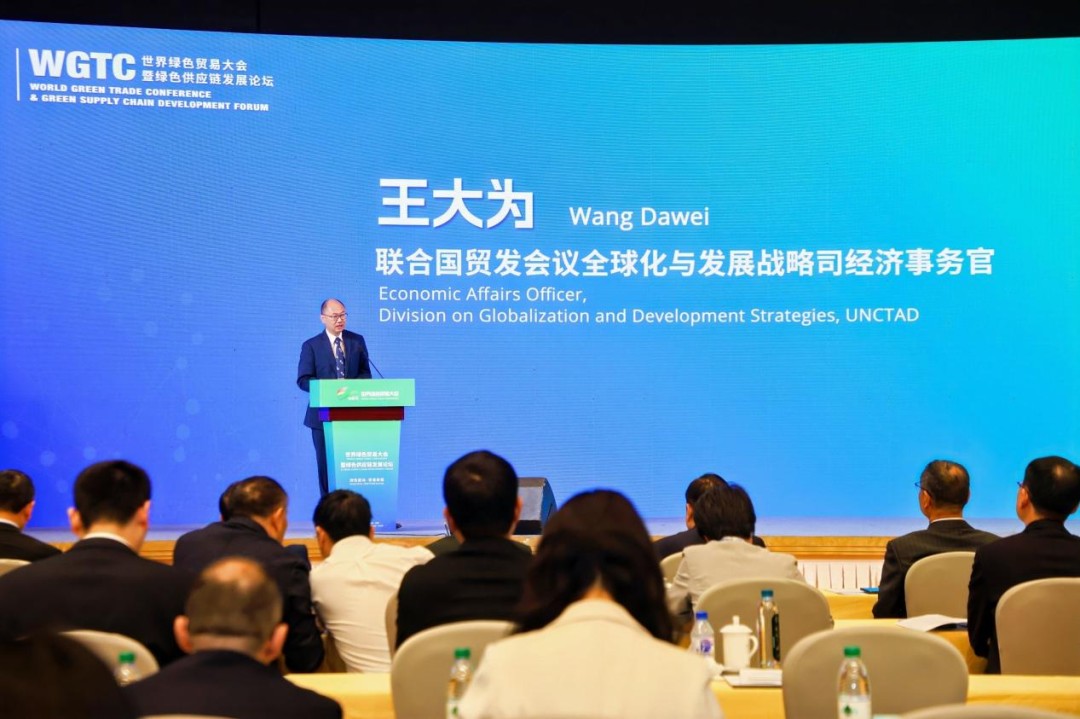
Wang Dawei, Economic Affairs Officer at the Division on Globalization and Development Strategies of the UNCTAD
Major Releases and Unveiling Ceremonies: Steady Steps from Vision to Action
The conference then moved to the outcomes release segment. Tian Ye, Deputy Secretary-General of the WFFTZ, officially released the Global Green Trade Development Action Plan (2026-2028). This plan establishes a common action framework for the next three years, outlining a detailed agenda with eight major initiatives focused on four goals: rule harmonization, trade facilitation, supply chain resilience, and technology transfer and capacity building. It is dedicated to building an open, collaborative, and inclusive new global green trade ecosystem.
Following that, Liu Ming, Vice President of CATIS and Chairman of Guo Gang Tong Group, launched the Asia-Pacific Digital & Intelligent Supply Chain Center Global Cooperation Initiative. This initiative calls on the Asia-Pacific business community to deepen platform cooperation, promote digital-intelligent synergy, build efficient logistics networks, foster an innovation ecosystem, and leverage the Hainan Free Trade Port to create an open and shared supply chain digital hub.
Witnessed by guests on-site, the conference held grand unveiling ceremonies for three major cooperative platforms: Global Green Trade Research Institute , Green Supply Chain Finance Committee of the World Federation of Free Trade Zones, World Free Trade Green Supply Chain International Joint Procurement Center.
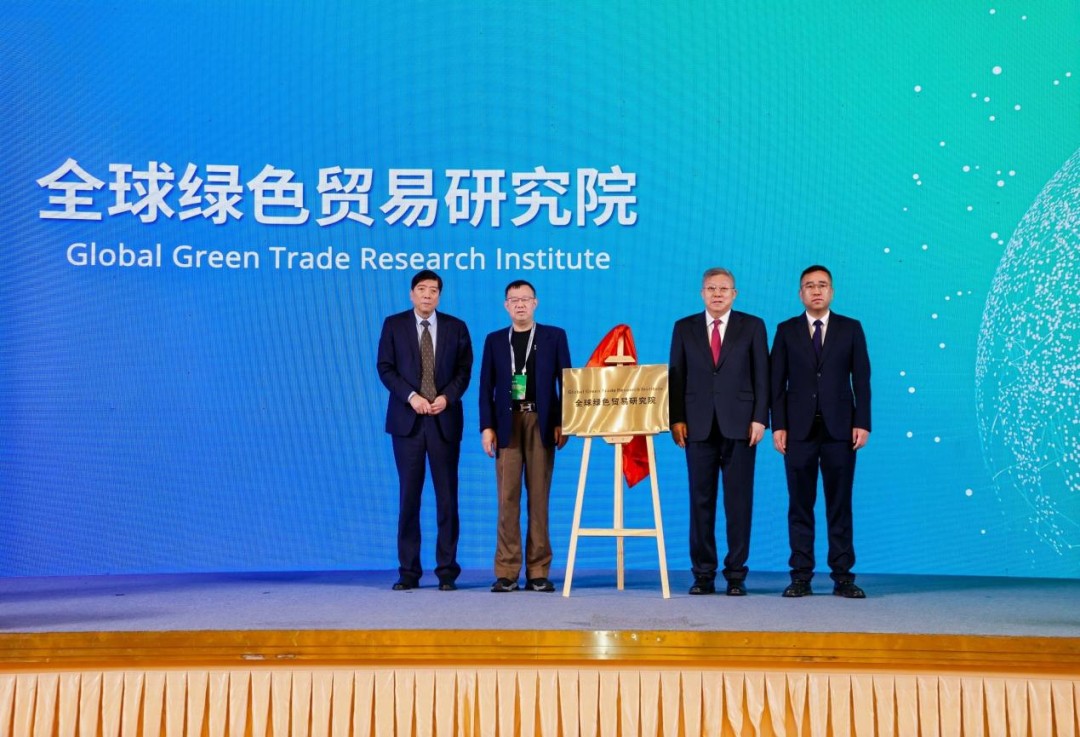
These launches marked a significant step from policy vision to operational reality, creating the institutional backbone for future collaboration.
Keynote Speeches and High-Level Dialogue: In-Depth Exchange of Ideas
In the keynote speech segment, Huo Jianguo, former President of the Chinese Academy of International Trade and Economic Cooperation (CAITEC), provided an in-depth interpretation of the trade innovation and green development directives within China's 15th Five-Year Plan. He analyzed the complex external environment, proposing that China should achieve trade balance and innovative development through developing service trade, green trade, and orderly promoting overseas industrial chain layout. He emphasized the need to actively respond to new trade rules such as the EU's Carbon Border Adjustment Mechanism (CBAM).
Zhou Weidong, Chief Representative for China at the World Business Council for Sustainable Development (WBCSD), shared insights on building sustainable global green value chains from a corporate practice perspective. He highlighted the Council's "Carbon Transparency Partnership" initiative, which aims to standardize product carbon emission accounting standards and data exchange. This helps Chinese enterprises, especially export-oriented ones in supply chains, navigate international carbon rules and transform green investments into competitiveness.
Jia Hai, Chief Strategic Client Officer at Far East Holding Group, shared the company's innovative development philosophy of "Value Co-creation" upheld over 41 years. He introduced its practices in ESG, green production, and international market expansion, demonstrating the commitment and capabilities of Chinese private enterprises in the global green transformation.
During the morning dialogue session, Frank Zheng (Director-General, WFFTZ), Shen Yuehao (President, Guo Gang Tong (Sanya) International Trade Co., Ltd.), Zhao Yuwei (CEO, Wujie Group), and Sun Guozhao (Executive Chairman, Oceania Business Association Incorporated) discussed global supply chain ecosystem collaboration. The panelists agreed that the future of supply chain competition lies in transitioning from "chain collaboration" to "network building," with data trust as its foundation and specialized third-party service providers as catalysts. Artificial intelligence will profoundly change trade patterns, and enabling SMEs to integrate into global networks affordably and conveniently is key to building resilient supply chains.
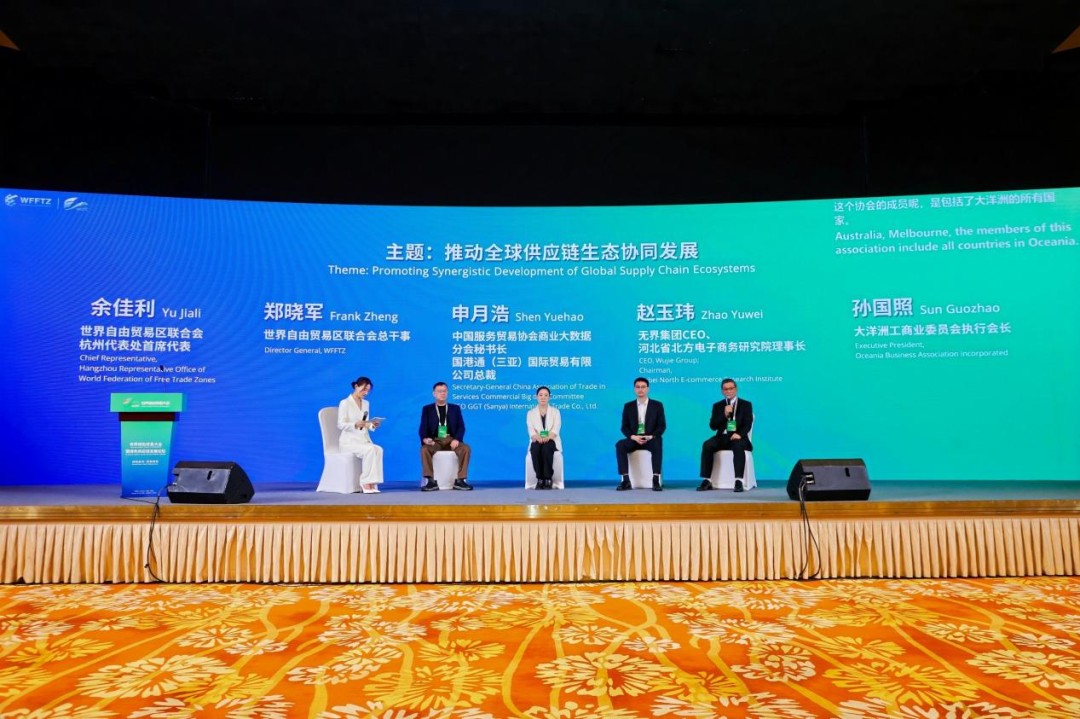
Roundtable Dialogue
Building on the morning's strategic dialogues, the afternoon sessions shifted focus towards actionable frameworks, on-the-ground business experiences, and the forging of tangible international partnerships.
Afternoon Agenda: Focusing on Rules, Practices, and Global Expansion
The afternoon session continued with a speech by Yao Xin, Secretary-General of the Organization for Trade Development and Standards Cooperation (ODCCN). He emphasized that the key to green trade lies in establishing a "common language" through the harmonization of standards, rules, and evidence. He pointed out the current challenges of "disconnect in metrics, disconnect in pathways, and disconnect in evidence." He called for promoting standard alignment, rule alignment, and evidence alignment, particularly by establishing a "green evidence chain," to make sustainability an executable and mutually trusted basis for transactions in the global market.
Corporate Practices and Regional Opportunities
Zeng Tianbao, Deputy General Manager of AI Products at ZTE, shared how the company uses its digital-intelligent compliance system "ECSS" to navigate complex international regulations, ensuring stable and sustainable global expansion.
Song Jinqi, representative from the Sanya Investment Promotion Bureau, detailed the core policies of the Hainan Free Trade Port, such as "zero tariffs, low tax rates, and simplified tax system," and showcased new industrial opportunities in Sanya across sectors like seed industry, deep-sea industries, and the digital economy.
Shen Yuehao, President of Guo Gang Tong, further elaborated on the platform functions of the " Asia-Pacific Digital & Intelligent Supply Chain Center." She proposed building a "trusted trade platform" as the foundation, creating a two-way channel for "Exporting Premium Chinese Products" and "Importing Quality Overseas Products" through a network of overseas matrix-style direct stores coordinated with overseas warehouses.

Shen Yuehao, President of Guo Gang Tong
Huang Shaozhong, CEO of Greenfield Commercial Group, launched the "Global Tenders Dao" platform. It aims to leverage artificial intelligence to address information asymmetry in international bidding, helping Chinese enterprises compete for global projects.
Collectively, these presentations underscored a clear trend: leveraging digital tools and local policy advantages is key to building competitive and compliant green supply chains.
Regional Cooperation Presentations
Zhao Weijiu, Deputy Director of the Shenyang Free Trade Zone Administrative Committee, and Yang Luyi, representative from the Malaysia-China Kuantan International Logistics Park, delivered presentations. They highlighted the unique locational advantages and investment potential of Northeast China and Malaysia as exemplary partners in the "Two Countries, Twin Parks" cooperation model, offering more diverse options for cross-border green industry layout.
Alliance Establishment: Jointly Exploring Green Markets
A highlight of the afternoon was the establishment ceremony of the China-Middle East (Saudi Arabia) Green Home Building Materials Industry Alliance. Wu Xiaoqing, Chief Representative, Saudi Representative Office of the WFFTZ, and Wen Feng, Executive Secretary-General of the China International Chamber of Commerce Home Building Materials Industry Committee, jointly announced the alliance plan. Saudi Chairman Mohammed Al-Sae'ari expressed support via video message. The alliance aims to integrate resources from both sides, connect with the huge demand for green building materials under Saudi Arabia's "Vision 2030," and promote standards mutual recognition, technological cooperation, and project implementation.
The formation of this alliance exemplifies the type of targeted, industry-specific cooperation the forum aimed to catalyze, linking supply directly with major green development demand.
Thematic Dialogues: Resilient Growth and Brand Globalization
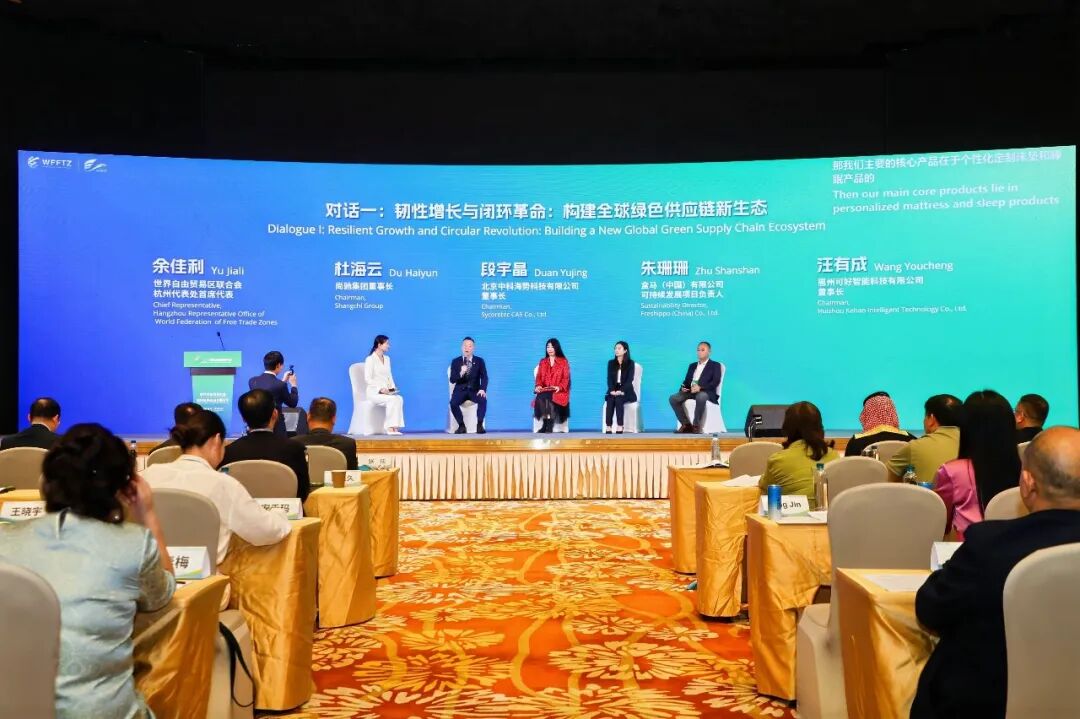
In the dialogue on "Resilient Growth and the Circular Revolution," representatives from Shangchi Home Furnishing, Sycoretec CAS, Freshippo, and Kehao Intelligent Technology shared their practices in green material R&D, supply chain decarbonization, and exploring circular economy models. They unanimously agreed that the core of green and sustainable development lies in the deep integration of a company's original mission with technological innovation and industrial application.
The "Brand Globalization" roundtable forum brought together representatives from the Belt and Road Sustainable Development Initiative, Australian Agricultural Group, Shanghai Data Exchange, a Mongolian law firm, and Eehe Doors& Windows. Panelists offered advice for Chinese brands going global from perspectives including regulatory adaptation, product quality, cultural outreach, data compliance, and legal risk control. The consensus was that globalization under new rules is now a systematic project. Enterprises must upgrade from "product export" to "value export" and "system capability export," internalizing compliance and ESG requirements as core competencies.
The forum's commitment to driving change was further celebrated by honoring leading players in the field.
"WFFTZ Global Awards" Recognizing Outstanding Practices
On the evening of January 17, the "WFFTZ Global Awards Ceremony" was grandly held, presenting six categories of awards for 2025 to recognize institutions and enterprises that have made outstanding contributions to global green development:
·WFFTZ Global Green Award: Port of Rotterdam Free Trade Zone,Netherlands , China (Shanghai) Pilot Free Trade Zone - Expo Area, BYD Company Limited, Far East Holding Group, etc.
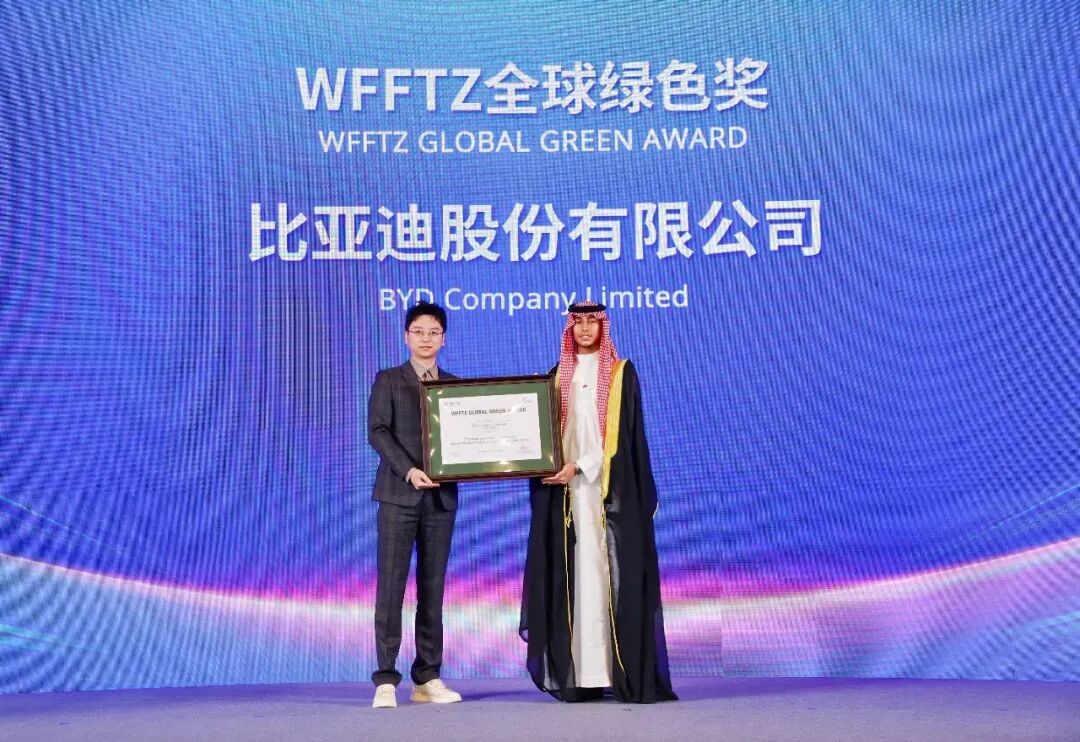
·WFFTZ Global Innovation Award: Port of Oslo Free Trade Zone, Shenyang Area of China (Liaoning) Pilot Free Trade Zone , PSA International, etc.
·WFFTZ Global Investment Award: Le Havre Free Zone, Malaysia-China Kuantan International Logistics Park, Jazan Economic City (Saudi Arabia), etc.
·WFFTZ Global Green Trade Award: IKEA, Guo Gang Tong Group, DP World, Jinxi Iron & Steel Group, Hebei Tuofa Telecommunication and Electric Equipment Manufacturing Co., Ltd., etc.
·WFFTZ Global Sustainable Development Award: Danone, BMW China, JOMOO Group, BWT Group, Bin County Coal Co., Ltd., Zhanjiang Yinhai Hotel, etc.
·WFFTZ Global Green Supply Chain Exemplar Award: French FIT Group, Australian Agricultural Group, Freshippo (Hema) China, COSCO Shipping Lines, etc.
The World Green Trade Conference & Green Supply Chain Development Forum was not merely an intellectual feast but also a declaration of action for promoting practical cooperation. By releasing guiding documents, unveiling key platforms, establishing industry alliances, and sharing cutting-edge practices, the conference charted a clear development path for global green trade and laid a solid foundation for cooperation. At a time when globalization is undergoing restructuring, the conference sent a clear signal: only by adhering to open cooperation, promoting rule alignment, stimulating innovation, and practicing green development can we jointly shape a more resilient, sustainable, and prosperous new future for global trade.
Source: World Federation of Free Trade Zones (WFFTZ)
Media Contact
Company Name: World Federation of Free Trade Zones
Contact Person: Yong Tian
Email: Send Email
Country: Antigua and Barbuda
Website: www.wfftz.org.cn